Showing posts with label survival. Show all posts

Saturday, February 11, 2012

An overlooked item for your BOB...Pedialyte

I can scour the internet all day and look at suggestions for items that should be included in a bug out bag and never get bored. No list is exactly correct because a bug out bag is a very individual thing. There are a few items that should be in all bog out bags though. One item that is ofter overlooked is Pedialyte. That stuff is a like a magical potion for hydration. Just try some next time your hung over :).

Many add Gatorade to their kit to use for emergency hydration but Pedialyte should replace that used space. Pedialyte has much more potassium and a significantly less sugar than Gatorade. Sugar can make dehydrating diarrhea worse when your body is sucking up any hydration it can get. Pedialyte has been designed from the ground up simply to rehydrate when you need it the most. I see the container as a bonus too. When the contents run out you have a water bottle. If your feel that the Pedialyte bottle is too bulky if you have a smaller BOB then there is another option. Pedialyte comes in powder form as well. You can get it in singles packages which are much easier to carry. Put a few of those in your first-aid kits.   

Hydration is the single most important factor in your survivability. In a dire situation a simple stomach virus can kill you. It would behoove any prepper to take my advice and add this wonder fluid to your preps. I keep short barrels stocked with kits in my garage and each barrel will have a bottle and a singles pack in it by the time this week it over. The singles need to be in your EDC (Every Day Carry) kit too. Pickle juice is also another super hydrator but is much less practical to stock.

Get your Pedialyte because when you have to bug out of your home because the zombies are taking over you will need to emergency hydrate at some point. Besides, how are you going to put some lead in a zed head when your are suffering from the effects of dehydration. Dehydration is a quick way to become a zombie and zombies will be met with by carbine. Don't be on the wrong end of someone's gun just because you forgot your Pedialyte.


Thursday, February 2, 2012

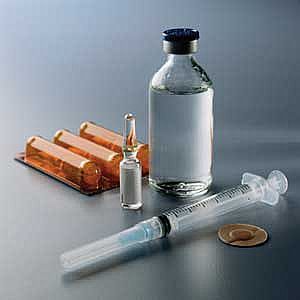
Diabetes Prep: What Every Diabetic Needs To Know

Below is an article from the Radical Survivalism Webzine. I found it too important not to share. Be sure to connect with Radical Survivalism through the links on their site, http://radicalsurvivalism.com/web/. 

_______________________________________________________

Diabetes Prep: What Every Diabetic Needs To Know


One segment of the population that is extremely vulnerable in a disaster is those who have insulin dependent diabetes. One thing that was gravely concerning in William Forschen’s book “One Second After” was the prominence diabetes was given in the plot with an apparent lack of research into this disease. Hopefully, this information will give some comfort and inspiration to those who live with this disease as well as those who reside with individuals or meet those who face these specific set of medical challenges.
Diabetics fall into two main categories. Type I diabetics produce no insulin at all in the body and are completely dependent upon manufactured insulin. Such people often develop diabetic symptoms in infancy or childhood. Type II diabetes produce insulin but it is either not enough or the body’s ability to use it is impaired. These people are usually diagnosed in middle age. Sadly, due to obesity and bad nutritional habits, adolescents are now being found to have this type of diabetes, too. Type II diabetics can sometimes control blood sugar levels with diet. They often need medications that improve insulin production. Many do use manufactured insulin to achieve the best control.
There have been many advances in treatment for diabetics in recent years, especially for those who depend upon insulin. Insulin may be injected with a syringe or delivered by a continuous pump. Currently, researchers are working to develop an insulin spray that can be inhaled through the nose and also a pill. Surgical options are also being researched.
For now, we have the problems of storing and handling manufactured insulin. Most insulin now in use is synthetic human insulin as opposed to the older insulins that were processed from pork or beef pancreas. There are various brand names and formulations. There are short and rapid acting insulins that are used at mealtime and if the blood sugar is very high that rapidly peaks in the body and is metabolized away. Very long acting (basal) insulins are released slowly over 12 to 24 hours providing a constant baseline insulin level and blood sugar control. Often, these two types are paired together for best control. There are also intermediate acting insulins which are usually taken in the morning and have their peak action 6 to 8 hours later that some patients benefit from. These are also usually combined with the short or rapid acting insulin.
Consequently, most insulin dependent diabetics will have two different insulins. In an emergency, other brands from the same group (short, long, intermediate) can be interchanged with only minor difficulties. If only one of the three categories is available, dosage adjustments may be needed. In a local or regional disaster such as hurricane, there are generally health providers available to assist with this. In a situation where such help is not available, dosage adjustments will need to be approached very carefully and in slow increments. A glucometer should be stored in a shielded container (Faraday cage) as well as extra batteries and test strips. Most Type I diabetics are fairly aware of how their body feels when blood sugar is up or down. Trust these feelings especially when testing is not available.
A useful strategy for Type I diabetics is “carb counting.” Many use this method to determine what their mealtime insulin dose should be. With the popularity of Low Carb Diets for weight loss, books are easily now available that provide the carbohydrate values for foods. This type of insulin dosing may require adjustment, but many diabetics feel it is worthwhile because it frees them to eat a wider variety of foods without anxiety. The “diabetic” category of foods is no longer necessary in diabetic treatment. This can make it much easier to plan your food storage. Diabetics can eat the same wholesome foods as others. It should be noted that diabetics have more reason than others to avoid large amounts of concentrated sweets and overly processed foods.
Storage of insulin is the next issue of concern. Most people believe that insulin must be refrigerated at all times. This is outdated information. Once a bottle of insulin or (insulin pen) is opened it should be stored at reasonable room temperature (59 to 86 degrees F). The manufacturer provides information regarding how long the insulin maintains potency after opening. For most insulins that is about thirty days. After that, the potency gradually deteriorates. If you had no choice but to continue using it, you would likely need more to maintain control as time went by. Refrigerating it makes no difference to this deterioration of open insulin. Insulin that freezes is generally not useable, it clumps. If your only insulin supply is exposed to temperatures above 85 degrees (F) it’s potency will degrade but it can be used safely.
Unopened insulin is best stored in a refrigerator. If you are able to prepare an alternate power source such as generator or solar array, this would be the preferred way to store insulin. If you don’t have this ability, a cool place underground area such as a root cellar is best. Even a place in your basement, protected from light will do. The temperature at depths of about four to twenty feet are constant at 50 to 55 degrees (F). “Refrigerature temperature” as defined by insulin manufacturers is up to 49 degrees (F). This difference of a few degrees between cellar and refrigerator temperatures will not cause the insulin to degrade at an extremely accelerated rate as portrayed in fiction.
Unfortunately, these measures will only carry you for a period of time. Type II diabetics are not likely to experience severe symptoms of high blood sugar. Some may even be cured of it with the weight loss likely to occur in a longer term disaster situation. Most of the consequences of Type II diabetes develop slowly due to the constant high blood sugar. Some of these are: decreased resistance to disease, eyesight deterioration to blindness, kidney failure, as well as sores on the feet and legs that may become infected resulting in sepsis.
Deprived of insulin completely, Type I diabetics may quickly become comatose and die. The only hope for these particular individuals is that some kind of order can be restored before supplies run out. The more supplies you have and the better your storage arrangements, the longer those with diabetes will live and be healthy. Insulin is one of the first supplies brought into disaster areas. Although we avoid depending on others, stockpiles of a relatively fragile necessity such as insulin are finite. We must do the best we can and hope that we can hold on for long enough.
Another type of diabetes we should plan for is Gestational Diabetes. This is high blood sugar levels during pregnancy in a woman who did not have diabetes prior to pregnancy. This type of diabetes usually ends when the baby is born. The main problem with this is that the baby is essentially ‘overfed’ while in utero by the high circulating blood glucose. This produces a larger than normal baby which is immature in its physical development. There is an increased probability of premature birth. Even if full-term, the baby may have under developed lungs which can cause significant challenges for the newborn or death if hospital care is unavailable. The large size of the baby presents an obvious problem for home birth.
Gestational diabetes most commonly occurs in women who have a family member with diabetes, are overweight, or over thirty. Women with this condition can be given insulin but not the currently available diabetes pills as the pills will harm the fetus. Gestational diabetes can often be controlled with diet. Since screening would be difficult in primitive conditions, all pregnant women should be cautious of diet during pregnancy. Do not use artificial sweeteners during pregnancy. Pregnant women will usually tolerate the higher blood sugar levels fairly well. Diabetic coma is highly unusual for pregnant women The greatest risk is primarily to the baby. For more information regarding Gestational diabetes testing, see below.
The biggest difficulty with insulin, as with any other prescription, is ability to stockpile. My first suggestion is to enroll in a 90 day supply option, now offered by most insurance plans often included with a mail in option. Refill as often as allowed, don’t wait until you run out. This can help with stocking up on medications such as asthma inhalers, too. If you are able to talk frankly with your doctor, explain that you would like to have a prescription for an extra supply to have on hand “just in case”. If you have prescription drug insurance, you will have to pay out of pocket for any extra supply. This is a small price to pay for peace of mind.
Information regarding Gestational diabetes testing with a glucometer:
Although glucometers are considered to be highly accurate, the test values may not conform exactly to the standards in use now because it would be difficult to measure an exact amount of grams of glucose being given. On the initial glucometer reading, fasting (eight to twelve hours without food or drink prior to test) blood sugar should be less than 100. One hour after drinking a sugary drink, such as a can of coke or big glass of orange juice, the reading should not be more than 200. By four hours after the test, the blood sugar reading should be back down to around 100. If the reading is abnormal, then the woman should be on a low carbohydrate, no concentrated sweets diet. Testing can be repeated to check if the adjustments in diet are helping to lower the blood sugar. Calories should be restricted enough to prevent the mother from gaining more than 35-40 pounds to try to keep the baby healthy and properly sized. Hopefully insulin will not be required since locating the drug during a disaster scenario could create even more serious challenges.


DISCLAIMER: Although this article has been written on a medical topic, no warranty whatsoever is made regarding the accuracy of the content. There is absolutely no assurance that any statement contained or cited in this article touching on medical matters is true, correct, precise, or up-to-date. Even when an accurate statement has been made about medicine, it may not apply to you or your symptoms.
The medical information provided here is, at best, of a general nature and cannot substitute for the advice of a medical professional. Neither the author of this article or the editors of Radical Survivalism Webzine are doctors. No one connected to Radical Survivalism Webzine can take any responsibility, or assume any liability, for the results or consequences of any attempt to use or adopt any of the information presented in this article. Further, nothing on RadicalSurvivalism.com should be construed as an attempt to offer or render a medical opinion, or otherwise engage in the practice of medicine.


PG
About The Author: Mama (Catherine) believes in preparedness as a way of life. Special emphasis on health as well as preparedness for women, families and communities. You can follow her on Twitter @MamasGotAGun.

Thursday, December 8, 2011

Cold Weather Survival Tips

[Original article at Survival News Online]


Tips for cold weather


While working on the next installment of emergency shelter articles (Intro and Basics), I decided to bring you these cold weather survival tips. In cold weather you face the danger of hypothermia, which is when your core temperature drops too low for normal metabolic function. But one way to freeze is to get too hot, break into a sweat, and then freeze later. Some of these tips seem contradictory, but they're not -- they just apply in different situations. Study them, and be wise in their application. So here are some tips for regulating your temperature in very cold conditions:

  • Sleep warm. Build a fire in your bedding place and let it burn down. Then push the embers aside and make your bed directly over the warm spot.
  • Stay dry. Shelter from rain is a top priority. In very cold weather, "if you sweat, you freeze." It is critical that you not overheat and get sweat-soaked. That's why it is so important to dress in layers. If you must get wet -- like if you have to cross a water course -- strip down, bundle your clothes, and make sure they stay dry as you cross. Hold them overhead or make a raft. Be certain you have the means to build a fire on the other side.
  • Remember the Extremities Rule: Wear a hat, gloves, and warm socks to keep your extremities plenty warm, but dress down and keep your torso from overheating. I favor a headband to keep my ears warm and will quickly ditch the hat if I'm getting too hot during strenuous activity. My feet are prone to cold, but not my hands, so I can effectively lose heat as needed by stowing the gloves with the hat. The point is, this rule is really just a reminder to regulate your temperature in whatever way works for you to keep you from getting overheated and breaking a sweat.
  • Watch for frostbite. Extremities and any exposed skin is at risk of frostbite. Early warning signs are a sensation of cold, of course, and then itching and pain. Don't ignore them. If your skin becomes discolored or numb, you urgently need to warm that area. First degree frostbite (frostnip) is when the surface of your skin develops white, red, or yellow patches and becomes numb. It's not really an emergency situation, yet, but you must give it immediate attention to avoid the onset of second degree frostbite, which is when the skin freezes and hardens. This will result in blistering and possibly debilitating injuries, which can limit your ability to care for yourself in the long run. In either case, avoid much movement of the affected area, which can damage the skin, and warm it gently. Avoid thawing and refreezing, which can result in severe damage of the skin. Deep freezing beneath the skin is a serious condition that requires expert medical attention.
  • Stay hydrated! Extremely cold air is very dry, and you can quickly become dehydrated without being wet from sweat. Sweating is not the only way your body regulates your core temperature. You can also dissipate excess heat by expanding the blood vessels near the skin and into your hands and feet -- as the blood circulates in the skin cooled by contact with the cold air, you lose heat that keeps you from breaking a sweat. But to properly maintain an adequate blood volume, you must be properly hydrated. Another risk in very cold weather is excessively drying your mucous membranes. If your nose and throat get very dry, you increase the risk of catching an upper respiratory infection (common cold) or flu. In hard conditions, a flu can kill you, but even a common cold will weaken you and put you at greater risk. So drink plenty of water!
  • Eat snow. I know "they" say not to, but like a lot of rules, this one is not applicable in some circumstances. If you're very active and feel yourself overheating, take mouthfuls of snow to cool you down. Let the snow melt slowly in your mouth, though, to keep from injuring your throat. You'll also get the benefit of a little hydration, although it takes a ridiculous amount of light snow to get even a little water.
  • Eat fats. Cold weather activities require gobs of calories to keep you going. If your typical diet consists of 2000 calories per day, you should plan on tripling that in intensive cold weather survival. Fat is an excellent way to get lots of calories.
  • Waste nothing. If you fry any fatty meats, save the rendered fat for burning in your shelter or just for eating.
  • Drink your fluids warm. If you're hunkered down for the evening, make tea or coffee, or drink hot broth or soup. Whatever you drink warm, your body won't need to burn extra dietary calories to maintain your core temperature.
  • You need salt. A correct electrolyte balance is needed, among other things, to regulate body temperature. It helps regulate blood pressure, circulation, and proper function of the nervous system.


Monday, November 21, 2011

Re-Post: Life After An EMP Attack... from 10-22-11

Most Americans do not know this, but a single EMP attack could potentially wipe out most of the electronics in the United States and instantly send this nation back to the 1800s. If a nuclear bomb was exploded high enough in the atmosphere over the middle part of the country, the electromagnetic pulse would fry electronic devices from coast to coast. The damage would be millions of times worse than 9/11. Just imagine a world where nobody has power, most cars will not start, the Internet has been fried, the financial system is offline indefinitely, nobody can make any phone calls and virtually all commerce across the entire country is brought to a complete stop. A nation that does not know how to live without technology would be almost entirely stripped of it at that point. Yes, this could really happen. An EMP attack is America's "Achilles heel", and everyone around the world knows it. It is only a matter of time before someone uses an EMP weapon against us, and at this point we are pretty much completely unprepared.

The sad thing is that we are spending hundreds of billions of dollars hunting down "terrorists" in caves on the other side of the globe and we have been told that because of "national security" it is necessary for our private areas to be touched before we are allowed to get on an airplane, but our government is doing essentially nothing to address what is perhaps our biggest security vulnerability.

What would you and your neighbors do if the power went out and it did not ever come back on?

What would you do if an EMP attack happened in the middle of the winter and you suddenly were not able to heat your home any longer?

What would you do if all the electronics in your car got fried and you simply could not drive anywhere?

What would you do if all the supermarkets in your area shut down because food could not be transported across the country anymore?

What would you do if you were suddenly unable to call your family and friends for help?

What would you do if you were suddenly unable to get the medicine that you needed?

What would you do if your debit cards and credit cards simply did not work any longer and you could not get any of your money out of the bank?

What would you do if all of these things happened all at once?

A single EMP attack would be the worst disaster that the United States has ever seen by far.

An electromagnetic pulse could potentially fry the vast majority of all the microchips in the United States. In an instant, nearly all of our electronic devices would be rendered useless.

Yes, the federal government knows all about this. The following excerpt is from an April 2008 report by the Commission to Assess the Threat to the United States from Electromagnetic Pulse (EMP) Attack....

“The consequences of lack of food, heat (or air conditioning), water, waste disposal, medical, police, fire fighting support, and effective civil authority would threaten society itself.”

Most of us have become completely and totally dependent on electricity and technology. Without it, most of us would be in huge trouble.

The following is how an article in the Wall Street Journal described the potential consequences of an EMP attack....

No American would necessarily die in the initial attack, but what comes next is potentially catastrophic. The pulse would wipe out most electronics and telecommunications, including the power grid. Millions could die for want of modern medical care or even of starvation since farmers wouldn't be able to harvest crops and distributors wouldn't be able to get food to supermarkets. Commissioner Lowell Wood calls EMP attack a "giant continental time machine" that would move us back more than a century in technology to the late 1800s.

It wouldn't be so bad if we had the knowledge and the infrastructure to live the way that they did back in the 1800s, but today that is simply not the case.

Dr. William Graham was Ronald Reagan’s science adviser and the chairman of the Commission to Assess the Threat to the United States from Electromagnetic Pulse (EMP) Attack. Dr. Graham believes that in the event of a large scale EMP attack, the vast majority of Americans would either freeze, starve or die from disease.

According to Graham, in the aftermath of an EMP attack life in America "would probably be something that you might imagine life to be like around the late 1800s but with several times the population we had in those days, and without the ability of the country to support and sustain all those people."

Would you be able to survive?

All of those big bank accounts may never be able to be recovered after an EMP attack. Your money might be instantly fried out of existence.

The following is what Graham believes would happen to the financial system in the event of an EMP attack....

“Most financial records are stored electronically. ATMs, which depend upon both power and telecommunications, would not be available; banks, which try to back up records but in general aren’t strongly aware of the EMP problem, would face the problem of unprotected storage and computer systems”

This is the danger of having a financial system that is so dependent on technology. We may wake up one day and find that all the money is gone.

But if an EMP attack actually happened, the biggest concern for most of us would be trying to figure out how to survive.

The president of the Center for Security Policy, Frank Gaffney, is convinced that a single EMP attack could result in the deaths of the vast majority of the population of the United States....

"Within a year of that attack, nine out of 10 Americans would be dead, because we can't support a population of the present size in urban centers and the like without electricity"

Are you starting to get a feel for the scope of the problem?

The sad thing is that so much could be done to protect this country from an EMP attack.

Right now, most vital U.S. military infrastructure has at least some protection from an EMP attack.

But the general population has been left completely and totally vulnerable.

It has been estimated that the entire power grid could potentially be protected for about 20 billion dollars. Considering the fact that we have spent over 400 billion dollars in Afghanistan, I think that we could afford it.

We have spent our national security dollars very, very badly and someday it is going to come back to bite us in the rear end.

Right now, other nations around the world are working feverishly to develop EMP weapons. The following is from a statement by Dr. Peter Vincent Pry to the United States Senate Subcommittee on Terrorism, Technology and Homeland Security on March 8th, 2005....

Russian and Chinese military scientists in open source writings describe the basic principles of nuclear weapons designed specifically to generate an enhanced-EMP effect, that they term "Super-EMP" weapons. "Super-EMP" weapons, according to these foreign open source writings, can destroy even the best protected U.S. military and civilian electronic systems.

But it is not just Russia and China that have been developing "Super-EMP" weapons. According to Newsmax, it is believed that North Korea may have tested a "Super-EMP" weapon back in 2009....

North Korea’s last round of tests, conducted in May 2009, appear to have included a “super-EMP” weapon, capable of emitting enough gamma rays to disable the electric power grid across most of the lower 48 states

Remember, all it would take is one strategically placed EMP attack to wipe out this nation.

But an EMP weapon is not the only danger that can produce this type of effect. The truth is that a really bad geomagnetic storm could also potentially produce almost as much damage.

This is something that everyone knows is one of our biggest vulnerabilities and it is something that we can make preparations for.

Yet the Bush administration and the Obama administration have just stood there and have done nothing.

Our idiocy is astounding.

General Eugene Habiger, the former head of U. S. Strategic Command, has said the following about the possibility of an EMP attack in the future....

“It is not a matter of if, it is a matter of when.”

Remember, this is something that could cause millions times more damage than 9/11 did.

Instead of molesting old ladies at airports and chasing goat herders around the mountains of Afghanistan, perhaps we should be addressing our largest security vulnerabilities.

But that would require using some common sense. Sadly, common sense seems to be in very short supply in Washington D.C. these days.

So if the government is not going to do anything about it, that means that it is up to you to prepare yourself and your family. This world is becoming very unstable and disasters can strike at any time.

We all saw what happened after Hurricane Katrina. The government response was a nightmare. An EMP attack would be millions of times worse and the federal government probably would not even be able to get you and your family any assistance.

You would truly be on your own.

So are you ready?

This is yet another reason why the number of preppers in the United States is exploding. A lot of people can see how the world is changing and they understand that the federal government is not going to come through for them when the chips are down.

An EMP attack could end life as we know it at any time.

It is a glaring security vulnerability and the entire world knows that it is there.

I hope that you are getting ready, because the government certainly is not.


I found this while researching EMP's on an open forum type news site but I could not rack down the original source as the site I got it from did not give their source.

Monday, October 24, 2011

Heavy-Duty Survival Kit for the Toughest Spots

I have never been one to give into novelty items that I think are cool when I see them on TV. I came across a nice little survival kit though from Gerber. It is part of their Bear Grylls series so my first thought was that is was all marketing for the all mighty dollar but then I actually paid attention to the product and it's pretty cool. I have not made it down to my local Sportsman's Warehouse to pick one up yet but Gerber makes good stuff so I trust that the quality is there and the content is quiet nice. This would make a great start for an Everyday Carry Bag (smallest of bug out bags). Just look...

The product of collaboration between Gerber and survival expert Bear Grylls, the Ultimate Kit is a 15-piece survival kit built for hostile environments. It fits in your pack and has everything you need--including Gerber's miniature multi-tool, a fire starter, a survival blanket, and a wire cutter--to survive even in the toughest spots.
Gerber and survival expert Bear Grylls Logo


Survival Series Ultimate Kit
At a Glance:

  • 15-piece survival kit built for hostile environments
  • Includes Gerber miniature multi-tool for a range of applications
  • Survival blanket, fire starter, snare wire, fishing and sewing kits, and more
  • Land to air rescue and SOS instructions
  • Comes with Bear Grylls' Priorities of Survival pocket guide
at a glance
Bear Grylls Survival Series Ultimate Kit - Open
The Ultimate Survival Kit has essential items for surviving outdoors. View larger.
Bear Grylls Survival Series Ultimate Kit -back side
Kit includes instructions for land, air, and SOS rescue techniques. View larger.
Bear Grylls and Gerber Team Up
The Ultimate Kit is part of the Gerber Bear Grylls Survival Series of gear. This collaboration brings together Gerber's 70+ years of knife and gear expertise with Bear Grylls' extensive outdoor survival and adventure experience to create a one-of-a-kind line of knives, tools, and gear.
From spending time in the British SAS, to scaling Mount Everest, Bear knows what it takes to be a survivor in extreme situations and multiple environments. Now he brings that knowledge to the creation of a range of items that help you make the most of your outdoor adventures.
Heavy-Duty Survival Kit for the Toughest Spots
Ideal for hard-core outdoor adventurers, the Ultimate Kit has everything you need to stay safe and alive until you can be rescued or rescue yourself.
The 15-piece kit includes the Gerber miniature multi-tool, which offers stainless steel, weather-resistant components including needle nose pliers, wire cutters, fine edge and serrated knives, a Phillips screwdriver, small and medium flat drivers, a lanyard ring, a bottle opener, and tweezers. This tool's rugged construction and external components make it a reliable multi-tasker, even in the harshest environments.

Bear Grylls' Pocket Survival Guide
Rugged, Ready-to-Go Tools and Accessories
In addition to the multi-tool, the Ultimate Kit comes with a lightweight ripstop nylon bag with a waterproof zipper for weather-resistant storage and an array of tools and accessories, including a miniature light, a hand saw, a signaling mirror, a survival blanket, a fire starter, waterproof matches, cotton ball fire tinder, a snare wire, an emergency cord, waxed thread, a fishing kit, and a sewing kit.
Includes Survival Guide and SOS Instructions
For added peace of mind and a higher level of preparedness, this kit comes with land to air rescue and SOS instructions. It also includes Bear Grylls' informative Priorities of Survival pocket guide, loaded with survival basics.
What's in the Box
Nylon pouch, multi-tool, miniature light, hand saw, signaling mirror, survival blanket, fire starter, waterproof matches, cotton ball fire tinder, snare wire, emergency cord, waxed thread, fishing kit, sewing kit, pocket survival guide, and rescue instructions.

Bear Grylls
From the highest peaks of the Himalayas, to the rainforests of South America, if world renowned outdoorsman Bear Grylls is on an adventure you can be sure he's equipped with the most durable outdoor gear Gerber has to offer.


From the Manufacturer

Gerber’s 31-000701 ultimate kit is a survival kit for hostile environments. Stick the ultimate kit in your backpack and hope you never have to use it. If you do, it has everything you will need to survive in even the toughest spots. This fifteen piece kit features a Gerber miniature multi-tool with needle nose pliers, wire cutters, fine edge knife, serrated knife, Phillips screwdriver, small flat driver, medium flat driver, lanyard ring, bottle opener, and tweezers. It comes in a water proof bag with miniature lights, hand saw, signaling mirror, survival blanket, fire starter, waterproof matches, cotton ball, fire tinder, snare wire, emergency cord, waxed thread, fishing kit, and sewing kit. It includes a lightweight, ripstop nylon bag with waterproof zipper, land to air rescue and SOS instructions, and the Priorities of Survival pocket guide containing Bear's survival essentials.


Saturday, October 22, 2011

Life After An EMP Attack: No Power, No Food, No Transportation, No Banking And No Internet

Most Americans do not know this, but a single EMP attack could potentially wipe out most of the electronics in the United States and instantly send this nation back to the 1800s. If a nuclear bomb was exploded high enough in the atmosphere over the middle part of the country, the electromagnetic pulse would fry electronic devices from coast to coast. The damage would be millions of times worse than 9/11. Just imagine a world where nobody has power, most cars will not start, the Internet has been fried, the financial system is offline indefinitely, nobody can make any phone calls and virtually all commerce across the entire country is brought to a complete stop. A nation that does not know how to live without technology would be almost entirely stripped of it at that point. Yes, this could really happen. An EMP attack is America's "Achilles heel", and everyone around the world knows it. It is only a matter of time before someone uses an EMP weapon against us, and at this point we are pretty much completely unprepared.

The sad thing is that we are spending hundreds of billions of dollars hunting down "terrorists" in caves on the other side of the globe and we have been told that because of "national security" it is necessary for our private areas to be touched before we are allowed to get on an airplane, but our government is doing essentially nothing to address what is perhaps our biggest security vulnerability.

What would you and your neighbors do if the power went out and it did not ever come back on?

What would you do if an EMP attack happened in the middle of the winter and you suddenly were not able to heat your home any longer?

What would you do if all the electronics in your car got fried and you simply could not drive anywhere?

What would you do if all the supermarkets in your area shut down because food could not be transported across the country anymore?

What would you do if you were suddenly unable to call your family and friends for help?

What would you do if you were suddenly unable to get the medicine that you needed?

What would you do if your debit cards and credit cards simply did not work any longer and you could not get any of your money out of the bank?

What would you do if all of these things happened all at once?

A single EMP attack would be the worst disaster that the United States has ever seen by far.

An electromagnetic pulse could potentially fry the vast majority of all the microchips in the United States. In an instant, nearly all of our electronic devices would be rendered useless.

Yes, the federal government knows all about this. The following excerpt is from an April 2008 report by the Commission to Assess the Threat to the United States from Electromagnetic Pulse (EMP) Attack....

“The consequences of lack of food, heat (or air conditioning), water, waste disposal, medical, police, fire fighting support, and effective civil authority would threaten society itself.”

Most of us have become completely and totally dependent on electricity and technology. Without it, most of us would be in huge trouble.

The following is how an article in the Wall Street Journal described the potential consequences of an EMP attack....

No American would necessarily die in the initial attack, but what comes next is potentially catastrophic. The pulse would wipe out most electronics and telecommunications, including the power grid. Millions could die for want of modern medical care or even of starvation since farmers wouldn't be able to harvest crops and distributors wouldn't be able to get food to supermarkets. Commissioner Lowell Wood calls EMP attack a "giant continental time machine" that would move us back more than a century in technology to the late 1800s.

It wouldn't be so bad if we had the knowledge and the infrastructure to live the way that they did back in the 1800s, but today that is simply not the case.

Dr. William Graham was Ronald Reagan’s science adviser and the chairman of the Commission to Assess the Threat to the United States from Electromagnetic Pulse (EMP) Attack. Dr. Graham believes that in the event of a large scale EMP attack, the vast majority of Americans would either freeze, starve or die from disease.

According to Graham, in the aftermath of an EMP attack life in America "would probably be something that you might imagine life to be like around the late 1800s but with several times the population we had in those days, and without the ability of the country to support and sustain all those people."

Would you be able to survive?

All of those big bank accounts may never be able to be recovered after an EMP attack. Your money might be instantly fried out of existence.

The following is what Graham believes would happen to the financial system in the event of an EMP attack....

“Most financial records are stored electronically. ATMs, which depend upon both power and telecommunications, would not be available; banks, which try to back up records but in general aren’t strongly aware of the EMP problem, would face the problem of unprotected storage and computer systems”

This is the danger of having a financial system that is so dependent on technology. We may wake up one day and find that all the money is gone.

But if an EMP attack actually happened, the biggest concern for most of us would be trying to figure out how to survive.

The president of the Center for Security Policy, Frank Gaffney, is convinced that a single EMP attack could result in the deaths of the vast majority of the population of the United States....

"Within a year of that attack, nine out of 10 Americans would be dead, because we can't support a population of the present size in urban centers and the like without electricity"

Are you starting to get a feel for the scope of the problem?

The sad thing is that so much could be done to protect this country from an EMP attack.

Right now, most vital U.S. military infrastructure has at least some protection from an EMP attack.

But the general population has been left completely and totally vulnerable.

It has been estimated that the entire power grid could potentially be protected for about 20 billion dollars. Considering the fact that we have spent over 400 billion dollars in Afghanistan, I think that we could afford it.

We have spent our national security dollars very, very badly and someday it is going to come back to bite us in the rear end.

Right now, other nations around the world are working feverishly to develop EMP weapons. The following is from a statement by Dr. Peter Vincent Pry to the United States Senate Subcommittee on Terrorism, Technology and Homeland Security on March 8th, 2005....

Russian and Chinese military scientists in open source writings describe the basic principles of nuclear weapons designed specifically to generate an enhanced-EMP effect, that they term "Super-EMP" weapons. "Super-EMP" weapons, according to these foreign open source writings, can destroy even the best protected U.S. military and civilian electronic systems.

But it is not just Russia and China that have been developing "Super-EMP" weapons. According to Newsmax, it is believed that North Korea may have tested a "Super-EMP" weapon back in 2009....

North Korea’s last round of tests, conducted in May 2009, appear to have included a “super-EMP” weapon, capable of emitting enough gamma rays to disable the electric power grid across most of the lower 48 states

Remember, all it would take is one strategically placed EMP attack to wipe out this nation.

But an EMP weapon is not the only danger that can produce this type of effect. The truth is that a really bad geomagnetic storm could also potentially produce almost as much damage.

This is something that everyone knows is one of our biggest vulnerabilities and it is something that we can make preparations for.

Yet the Bush administration and the Obama administration have just stood there and have done nothing.

Our idiocy is astounding.

General Eugene Habiger, the former head of U. S. Strategic Command, has said the following about the possibility of an EMP attack in the future....

“It is not a matter of if, it is a matter of when.”

Remember, this is something that could cause millions times more damage than 9/11 did.

Instead of molesting old ladies at airports and chasing goat herders around the mountains of Afghanistan, perhaps we should be addressing our largest security vulnerabilities.

But that would require using some common sense. Sadly, common sense seems to be in very short supply in Washington D.C. these days.

So if the government is not going to do anything about it, that means that it is up to you to prepare yourself and your family. This world is becoming very unstable and disasters can strike at any time.

We all saw what happened after Hurricane Katrina. The government response was a nightmare. An EMP attack would be millions of times worse and the federal government probably would not even be able to get you and your family any assistance.

You would truly be on your own.

So are you ready?

This is yet another reason why the number of preppers in the United States is exploding. A lot of people can see how the world is changing and they understand that the federal government is not going to come through for them when the chips are down.

An EMP attack could end life as we know it at any time.

It is a glaring security vulnerability and the entire world knows that it is there.

I hope that you are getting ready, because the government certainly is not.


I found this while researching EMP's on an open forum type news site but I could not rack down the original source as the site I got it from did not give their source.

Friday, October 21, 2011

Video: Easy Tin Can Cook Stove

Here is a cool video on making a tin can cook stove. Tin cans are everywhere so this is valuable information.
This is how you use it...

Tuesday, October 18, 2011

FREE book download: Post-Apocalyptic Personal & Family Security by Bill Drake

Here is a free download of Bill Drake's book Post-Apocalyptic Personal & Family Security. It is shared for FREE under the Creative Commons License. I always try to be fair when sharing the wrok of others so I want eveyone to know that I found his on the SHTF Blog. If you have never checked out the SHTF blog you should give it a visit by clicking HERE.

This book covers topics such as:
  • Creating a Secure Residential Interior and Exterior
  • Alarm Systems
  • Foot Surveillance
  • Options for Targeted Individuals
  • Handling Stress During Crisis
  • Home Evaluation
  • Security on The Move – In Transit
  • and much, much more


Sunday, October 16, 2011

REPOST: Prepping For College Students, Apartment Dwellers, And People In Tight Spaces

 I went back to the archives (very recent) for this; it is too important not to share again.


School in back in and the world is getting more chaotic by the day. Living on campus certainly presents some challenges for those of us who are of the prepper state of mind. I spent a few years in the dorms myself. There are lots of regulations and then there is the issues that arise from having a very limited amount of space. It is impossible to be as prepared as a man with 10 acres in the sticks if you are living in a dorm room but there are steps you can take to increase your survivability. This information can be useful for apartment dwellers as well. In the event of a disaster the biggest problem will be your fellow students. Let's face it, college students are generally idiots. They are generally less than half as smart as they think they are and have the skill level of a gnat when it comes to skills that increase survivability. These are the type of people that panic. It is best to keep our dorm room preps quite.

Here is a list of things that you can do to help with your preps while on campus. Keep in mind that this kit is only the essential. It is designed around limited storage space like a dorm room tends to have.
  • Hide $50-$100 in your room. Make sure half of it is in $1 bills.
  • Keep at least a half of a tank of gas in your vehicle. A campus is generally somewhere that you will want to bug out of if something happens.
  • Keep some hand sanitizer handy. A face mask would be a good idea too. Dorms are notorious for viral outbreaks. A serious pathogen can spread like wild fire in dorms.
  • No matter how sick you are of ramen noodles you need to have a small stock pile of them. 3600 Calorie ER Bars are great too.
  • As I always say, stash some Bic lighters
  • Make sure you have flashlights and batteries.
  • If your institution has a mass text service sign up for it.
  • Get a first aid kit
  • Make sure you have a couple of changes of clothes in you bug out bag.
  • Have three gallons of water on stand-by.
  • Make sure you have a knife. Just be sure that you are not breaking the rules. Most universities have a limit of an 8" blade length allowed on campus.
  • Very few colleges allow guns on campus. You can still be close to yours. Join a gym and lock your gun up in your gym locker.
  • Make sure you have your emergency documentation in your car and in your room. Don't forget to have your three routes to three different locations in there. Use printed maps. Your handy-dandy GPS might not work when you need it to.
  • Put all of these items in a bug out bag. You are basically creating a mini bug out kit.

The next thing a student needs to consider is when it is time to bug out or when bugging in is a better option. If riots break out in your college town it is probably time to get the hell out of town. If an ice storm hits it is time to bug in.  Just make sure you stay informed on the given situation and  stay ahead of the curve. If an infection is spreading throughout the cities and zombies are running rampant you need to bug out and do it before the infection hits your town. Information is key. Your goal is to hit the road before any one else in a bug out situation. People tend to panic a that they become the most dangerous threat of all. If you are at a campus that is far away from home you may want to find some fellow preppers that can help you with the area you are in. It is hard to bug out if you don't know where to go. I like to have three bug out location. One of them is 2 hours away from home, another is four hours away from home, and the third location is six hours away. I also have some local places to go in case a am hit by a very localized disaster that only affects my neighborhood.

How can I learn to increase my survivability?

  • Read Zombie Splatter on a regular basis. It is free and your can subscribe via RSS by clicking HERE. Or you can follow ZS by email with the box at the bottom of this page. Be sure to connect with us on facebook and twitter.
  • Start listening to The Survival Podcast. The listener feedback shows cover a lot of very important content
  • Make sure you have your emergency documentation. Click HERE for a template so you can make you documentation package.
  • Check out the ZS Bug Out Bag page to get a better understanding of what a full-sized bug out bag has in it.

I am very interested in your input on this post. If your a living in dorms what kind of input do you have. You can comment using the comment box just below. It is powered by facebook so just login in and leave your comment.


What to do when the grocery store shelves are empty

   When a disaster strikes the first resources to run out will be food and fuel. If you are properly prepared at home you wont need too much fuel unless the given disaster is an evacuation type situation. You typical "tin hat" survivalist will tell you that they will chose one of their 60 guns and head out hunting and foraging. While those skills are invaluable everyone else will have the same idea. Wildlife populations will be decimated at a pretty fast rate. As a survivalist you need to know how to produce you own food and with winter around the corner now is the time to start gearing up for spring. Every person on this plant needs to eat. Learn how to garden and start a simple garden so that you can hone your skills. It doesn't matter if you live on a 700 acre ranch of a small metropolitan apartment with a 4ft balcony; you can produce some, and in some cases all, of your own food. Start simple. Try growing some tomatoes in a window. If you fail figure out why you failed and correct it. It you succeed you should try some other vegetables.
   There are so many options when it comes to gardening methods that I cannot possibly hit them all in one post. This is going to be a small series of articles but to give credit where credit is due I want to mention Jack Spirko of The Survival Podcast. Jack's show is probably the best gardening resource available. I also learned alot from my parents since they always had a good sized garden when I was growing up. If you check out The Survival Podcast be sure to hit them up on facebook from the main TSP page and let them know that Zombie Splatter sent you. Maybe he will give me a shout out with his horde's of listeners listening. Anyways, I am rambling. Back to producing you own food. People also needs protein to survive. This can be a little tricky since alot of us, including myself, are forced to live within city ordinances. If you have land and do not have to worry about following the code laid down by "the man" you need to at least have a few chickens running around. Free egg production is just one of the countless number of benefits chickens can bring to your efforts. I will have to do and entire post on chickens. Rabbits are also great since their meat is great for you and they reproduce very rapidly.
Ok, I want to start a small garden. What should I do first?
   First you need to decided what you want to grow. But before you can do that you need to know what hardiness zone your are in. Look at the map to figure it out:
Now that you know what you want to grow need to decide if you want a traditional (tilled up rows) garden, if you want a container garden, a raised bed garden, or if you want to do something really cool like aquaponics. I will discuss each one of these in separate individual posts. Stay tuned to ZS for the coming articles because when the zombies have you trapped behind you barricades you will need to eat some of the rabbits and beans right out of your back yard. I am making a series out of this.

Saturday, September 10, 2011

Prepping For College Students, Apartment Dwellers, And People In Tight Spaces

School in back in and the world is getting more chaotic by the day. Living on campus certainly presents some challenges for those of us who are of the prepper state of mind. I spent a few years in the dorms myself. There are lots of regulations and then there is the issues that arise from having a very limited amount of space. It is impossible to be as prepared as a man with 10 acres in the sticks if you are living in a dorm room but there are steps you can take to increase your survivability. This information can be useful for apartment dwellers as well. In the event of a disaster the biggest problem will be your fellow students. Let's face it, college students are generally idiots. They are generally less than half as smart as they think they are and have the skill level of a gnat when it comes to skills that increase survivability. These are the type of people that panic. It is best to keep our dorm room preps quite.

Here is a list of things that you can do to help with your preps while on campus. Keep in mind that this kit is only the essential. It is designed around limited storage space like a dorm room tends to have.
  • Hide $50-$100 in your room. Make sure half of it is in $1 bills.
  • Keep at least a half of a tank of gas in your vehicle. A campus is generally somewhere that you will want to bug out of if something happens.
  • Keep some hand sanitizer handy. A face mask would be a good idea too. Dorms are notorious for viral outbreaks. A serious pathogen can spread like wild fire in dorms.
  • No matter how sick you are of ramen noodles you need to have a small stock pile of them. 3600 Calorie ER Bars are great too.
  • As I always say, stash some Bic lighters
  • Make sure you have flashlights and batteries.
  • If your institution has a mass text service sign up for it.
  • Get a first aid kit
  • Make sure you have a couple of changes of clothes in you bug out bag.
  • Have three gallons of water on stand-by.
  • Make sure you have a knife. Just be sure that you are not breaking the rules. Most universities have a limit of an 8" blade length allowed on campus.
  • Very few colleges allow guns on campus. You can still be close to yours. Join a gym and lock your gun up in your gym locker.
  • Make sure you have your emergency documentation in your car and in your room. Don't forget to have your three routes to three different locations in there. Use printed maps. Your handy-dandy GPS might not work when you need it to.
  • Put all of these items in a bug out bag. You are basically creating a mini bug out kit.

The next thing a student needs to consider is when it is time to bug out or when bugging in is a better option. If riots break out in your college town it is probably time to get the hell out of town. If an ice storm hits it is time to bug in.  Just make sure you stay informed on the given situation and  stay ahead of the curve. If an infection is spreading throughout the cities and zombies are running rampant you need to bug out and do it before the infection hits your town. Information is key. Your goal is to hit the road before any one else in a bug out situation. People tend to panic a that they become the most dangerous threat of all. If you are at a campus that is far away from home you may want to find some fellow preppers that can help you with the area you are in. It is hard to bug out if you don't know where to go. I like to have three bug out location. One of them is 2 hours away from home, another is four hours away from home, and the third location is six hours away. I also have some local places to go in case a am hit by a very localized disaster that only affects my neighborhood.

How can I learn to increase my survivability?

  • Read Zombie Splatter on a regular basis. It is free and your can subscribe via RSS by clicking HERE. Or you can follow ZS by email with the box at the bottom of this page. Be sure to connect with us on facebook and twitter.
  • Start listening to The Survival Podcast. The listener feedback shows cover a lot of very important content
  • Make sure you have your emergency documentation. Click HERE for a template so you can make you documentation package.
  • Check out the ZS Bug Out Bag page to get a better understanding of what a full-sized bug out bag has in it.

I am very interested in your input on this post. If your a living in dorms what kind of input do you have. You can comment using the comment box just below. It is powered by facebook so just login in and leave your comment.


Sunday, July 24, 2011

Mylar can save your life

Mylar was developed in the 1950's as part of a project for NASA. It was used to make the balloons on the Echo Satellites launched in the 1960's. While it was developed for the space program it wasn't long until people started realizing it's true potential. Mylar is one of those products that just keep saying "I would be good at this." It has too many uses to list. Have you seem Space Blankets? They are made from Mylar. Since this is a survival based blog most of those uses don't need to be mentioned anyways. Mylar film has some excellent survival attributes, among them are:
1. Reflects existing light in a room to increase the total light from the source.
2. Helps indoor plant seedlings get more light by reflecting the grow lights or low sunlight.
3. Line solar ovens for faster cooking.
4. Increases outdoor plant growth in low light situations or when temperatures are low.
5. Can scare birds away from your seedlings or berries when they see their own reflections.
6. Could increase effectiveness of a solar dehydrator.
7. Mylar bags can be used for long term food storage
8. Mylar reflects a lot of heat which makes it ideal for a survival shelter construction.
9. ....and many more

Not only is Mylar great for retaining body heat. It is also great for protecting you from the sun in the form of a lean-to shade structure. Mylar it also moisture proof. Moisture will not seep through the film. That also makes it great for collecting water and rain water. You should add 2 Mylar blankets for each person in your home to each of you vehicles, bug out bags, 72 hour kits, survival kits, etc. There is no excuse not to. Mylar blankets are cheap and very compact.

I have never seen this but I have been told that you can start a fire with Mylar. You can line a bowl with Mylar, place some kindling in the center, and point it at the most direct sun rays. Like I stated before, I have never seem it. If you have see it done be sure to leave a comment in the comment box on the bottom of this page. If you have any other survival uses for Mylar, and there are many more, be sure to comment.

Thank you for reading Zombie Splatter: Helping you stay alive because tomorrow counts. Be sure to connect with us on Facebook and join our YouTube account. We will be posting some videos soon. While you at it share us with your friends too.