Sorry for not posting this weekend. It has been a busy week. I stumbled across this FREE app for android. It is an app for the U.S. Army Survival guide. You can get it here: https://market.android.com/details?id=com.androidtrainer.survive&feature=search_result.
You can get this app on iPhone, iPod, or iPad for $1.99 at: http://itunes.apple.com/us/app/army-survival-for-ipad-iphone/id343747489?mt=8

Papa Romeo Echo Papa, is a survival blog and podcast. We focus on survival through and after disasters. We believe that disaster preparation should be broad and cover multiple scenarios. We also believe that your preps should be practical even if a disaster never happens.
Sunday, August 28, 2011


Sunday, August 21, 2011
Video: AR 15 Handling Skills - Basic Tactical Shooting
Here is a great video on some basic shooting and handling skills

Building Your Food Bank Without Breaking The Bank
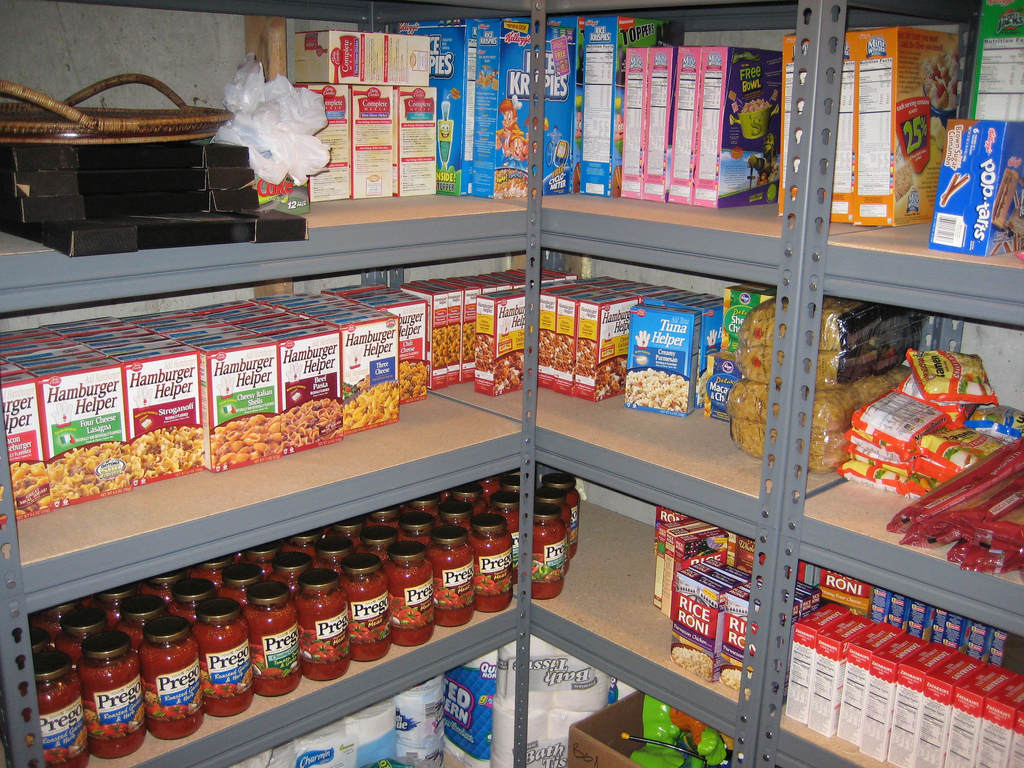
Any serious survivalist knows that food stockpiles are a key factor in your survivability. Primitive skills, the ability to create, grow, and kill your own food is great and the more you know the better. Stockpiles allow you to sustain yourself and your family for longer without struggling to replenish your supplies. Building a personal food bank can be very expensive, especially in a economy that only allows most people to buy what they need on a day to day basis. There is hope.
Couponing seems like something soccer moms should be doing while the kids are at school but it is not limited to them. We survivalists can greatly benefit from couponing and if we do it right our stockpiles can be built for next to nothing if not free. TLC's show Extreme Couponing shows the rare cases of extreme saving using coupons. It seems unreal and it basically is unrealistic unless you want to put in 40+ hours a week to cutting coupons and strategizing your shopping trips. This is where time becomes your friend. Use coupons to ass to your food bank a little at a time.
I found a great website to get you started. Couponing101.com has all of the information you need to know to begin couponing your way to a room full of food. The following was pulled directly from that site:
Are you visiting after watching TLC’s “Extreme Couponing”? Please read this post first: Realistic Couponing. Be sure to sign up for FREE Email Updates so you never a miss a deal, freebie, or coupon!
Couponing 101: A Beginner’s Guide to Couponing
Get some coupons!
Get some coupons!
- The Sunday newspaper is a great source of coupons. Buy the newspaper with the largest circulation in order to get the best coupons. You can sometimes get them cheaper by buying a double pack. I find that a good rule of thumb is to purchase one newspaper per family member.
- Ask your friends and family for coupons. If they get a newspaper but usually throw out the coupons then they’ll probably be happy to give them to you.
- Peruse the Internet. There are many great online printable coupons to be found! You can find a list of Internet printable sites here!
- Use a clipping service. If there is a great coupon that you would like to have multiples of then you might consider ordering the coupons from a clipping service like The Coupon Clippers.
- Check the store. There are many varieties of coupons that you can find in the store. See a list here.
Organize your coupons!
- Envelopes. You can start by clipping and putting them all in an envelope or check file. But, once you’ve been couponing for a few weeks you will need something bigger.
- File by insert. With this method you just file your inserts by date in a box and use an online coupon database to find the coupon you need. This method doesn’t require much work but you might miss out on unadvertised deals by not having all of your coupons with you at the store.
- Coupon Binder. With this method you would clip all of your coupons and file them in baseball card holders in a three-ring binder. With this method you can carry your binder to the store and have all your coupons with you while you shop. You can see my coupon binder here!
Know your store’s coupon policy!
- Loyalty Cards. If your store offers a loyalty card then make sure to get one. Some stores only give the sale prices to card-holders. Loyalty cards are Free!
- Double/Triple coupons. Double/triple coupons is when the store will take your 50¢ coupon and double it making it $1. This is done automatically at the register, you do not have to do anything to take part in this promotion. First, find out if your store doubles/triples coupons. If they do then find out the maximum double/triple value and how many they will double/triple. My Albertson’s will triple up to 35¢ and double up to 50¢. That means my coupons that are 35¢ and under will triple and 50¢ and under coupons will double. So, at Albertson’s my 50¢ coupon is actually worth $1. And they will only double/triple the first four like coupons. So, if I have 10 coupons for 50¢ off of shampoo, only the first four will double.
- Stacking coupons. Some stores will allow you to use one store coupon (the discount is provided by the store) and one manufacturer coupon (the discount is provided by the manufacturer) per item.
- Internet coupons. Find out if your store accepts Internet coupons.
- Competitor coupons. Some stores will accept competitors coupons.
- Expired coupons. Some stores will accept expired coupons!
Make a plan!
- Weekly Ads. Read the weekly store ads to see what is on sale and which stores have the best prices on the items you need. If you don’t get the weekly ads delivered you can usually view them on the store’s website.
- Coupon Matchups. See if you can match coupons to the sale items to get an even better deal! Some websites do this for you. Couponing 101 provides weekly coupon matchups for CVS, Walgreens, Albertson’s, Brookshire’s, and Kroger.
- Pricematch. Some stores, like Walmart, will pricematch. This means that if grapes are on sale for 99¢/lb at Kroger, you can take the ad to Walmart and at checkout tell the cashier that you would like to pricematch the grapes. Show them the ad and they will sell you the grapes for 99¢/lb versus their higher price.
- Make a List! Don’t go to the store without a list. Lists remind you what you came for and keep you from buying items you don’t need.
- Rainchecks. If your store is out of the sale item, get a raincheck! Go to customer service and ask for a raincheck for the item you wanted. They will fill out a piece of paper with the item details and price. Then you can come back another day (usually no more than 30 days) and buy that item at the sale price by giving the cashier the raincheck. This also gives you more time to gather coupons for the item! You can still use a coupon if you are using a raincheck.
Don’t be fooled!
- 10/$10 promotions. You do not have to buy 10 items to get the $1 price! The only exception to this rule is if the ad states that you must! Those times are rare and are usually for items that are buy x get y free, final price 2/$5, etc.
- Rock-bottom prices. Don’t go out and use your coupon immediately! If you use that 25¢ off toilet paper right away when it’s not on sale you aren’t reaching your saving potential! Wait until toilet paper goes on sale for $1 then use the coupon. If your store triples coupons then you could get the toilet paper for only 25¢! Matching sales with coupons is getting a great price. Combining sales plus coupons plus another promotion (rebates, double coupons, store coupons) is getting the best price!
- “One per Purchase.” I’ve heard this so many times! Most coupons say “one coupon per purchase” somewhere in the fine print. Cashiers will try to tell you that that means you can only use one coupon per transaction/day. This is NOT true! One per purchase means that you can only use one coupon per item purchased! So if you are buying 10 items and have 10 coupons then you can use them all!
- Leave the kids at home! Shopping with kids will distract you and cause you to buy items not on your list!
- Make a Pricebook. Start paying attention to prices and keep a list of items you regularly buy with the best and regular prices for those items. This will help you when you see that canned veggies are on “sale” for 10/$10 but the regular price is actually 99¢!
- Limits. Stores will sometimes put limits on the item to make you think it’s a great price! If cereal is just on sale 2/$4 you might not even notice it. But if it’s on sale 2/$4, limit 2! then you will likely think it’s a great price since they had to put a limit on it!
- Shop early. If you have couponers in your area then it’s best to get to the store as early in the sale as you can!
- “Bigger is better.” The cost per unit of the bigger box of cereal may be less than the smaller one but with coupons and sales the smaller box is likely a better deal.
- Watch the cashier. When checking out pay close attention to the price screen to make sure everything rings up at the correct price. Also, make sure that the cashier scans all of your coupons. Coupons sometimes stick together or get dropped or the cashier will scan the coupon but not realize that it didn’t go through. Kindly point out that they missed one and they will correct it.
- Check your receipt. BEFORE leaving the store look over your receipt to make sure everything rang up correctly and all of your coupons were scanned. If there is a problem take it to customer service immediately so they can fix it. If you leave the store and come back at another time then it might not be fixable. If the cashier missed a coupon and you notice right away it’s easy to see the mistake. But, if you come back later after several other coupons have been added to the cashier’s stack or the stack is gone then there is no way to prove that they missed a coupon.
Build your stockpile!
- Start slowly. Don’t buy a ton of everything as soon as you get started or you will blow your budget! A stockpile takes time. Set aside a part of your weekly grocery money for stockpiling and do what you can with what you have.
- Buy for the future. If an item goes on sale for a great price (or free!) then buy more than you need for just the week. Typically sales go in 12 week cycles so you only need to buy enough for 12 weeks. So, if you eat 1 box of cereal per week then when you find cereal at a rock-bottom price then you should buy 12 boxes. This way you have cheap cereal that will last you until you can buy it at a rock-bottom price again.
- Know how much you use. Start paying attention to how many bottles of shampoo, packs of diapers, boxes of cereal, etc. you use. This will help you to have a better idea of how much you should buy and to not go overboard! If you only eat 1 box of cereal a month then there is really no need to buy more than a few boxes or they will just go to waste.
- Donate it. Every couponer will eventually go overboard and buy too much of something. If there is no way you will use it before it expires then consider donating the item to a shelter or food pantry.
Saturday, August 20, 2011
Jihadists Call for Bombing U.S. Military Funerals | Chandler's Watch
Jihadists Call for Bombing U.S. Military Funerals | Chandler's Watch
Jihadists Call for Bombing U.S. Military Funerals
On August - 18 - 2011

Jihadists are being encouraged to strike America in a sickening new way by bombing the funerals of U.S. service members killed in action.
A recent post on the Ansar al-Mujahedeen web forum cites 2009′s Fort Hood massacre as a truiumph.
It urges readers to conceal suicide vests under fake military uniforms to get close to funeral VIPs like military brass and state governors.
An unnamed author on the site writes: ‘There is no doubt that targeting America in these times will have a significant impact in hastening its withdrawal from the countries it occupies, on top of which is Afghanistan.’
He also said he hoped an attack would compound the global economic crisis.
The writer states that security is ‘almost non-existent’ at the funerals, according to a translation by the SITE Institute’s terror monitoring service.
But the writer is clearly ill-informed.
Police and volunteers like the Patriot Guard Riders swarm the rites to shield relatives and other mourners from the media and from demonstrators like the protesters from the Westboro Baptist Church.
Zombies in your lake! Real life brain eaters
 There is a deadly amoeba attacking throughout the south. It lives in freshwater lakes and thrives in the summer months. A quick dip in the lake could lead to an invasion of brain-eating micro-organisms. There have been three deaths this year caused by this zombie bug. The worst part about it is the fact that it kills before doctor's can correctly diagnose it. This brain eater it called primary amoebic meningoencephalitis or PAM. Realistically the chances of you contracting this bug is millions to one.
Here is the Wikipedia article on PAM:
Click HERE for link to articlePrimary amoebic meningoencephalitis
From Wikipedia, the free encyclopedia
| Primary amoebic meningoencephalitis | |
|---|---|
| Classification and external resources | |
 Histopathology of amebic meningoencephalitis due to Naegleria fowleri. Direct fluorescent antibody stain. (CDC) | |
| ICD-10 | A06.6, B60.2 |
| ICD-9 | 136.2 |
| eMedicine | ped/81 |
Contents[hide] |
[edit] Presentation
Naegleria fowleri propagates in warm, stagnant bodies of freshwater (typically during the summer months), and enters the central nervous system after insufflation of infected water by attaching itself to the olfactory nerve.[3] It then migrates through the cribiform plate and into the olfactory bulbs of the forebrain,[4] where it multiplies itself greatly by feeding on nerve tissue. During this stage, occurring approximately 3–7 days post-infection, the typical symptoms are parosmia, rapidly progressing to anosmia (with resultant ageusia) as the nerve cells of the olfactory bulbs are consumed and replaced with necrotic lesions.After the organisms have multiplied and largely consumed the olfactory bulbs, the infection rapidly spreads through the mitral cell axons to the rest of the cerebrum, resulting in onset of frank encephalitic symptoms, including cephalgia (headache), nausea, and rigidity of the neck muscles, progressing to vomiting, delirium, seizures, and eventually irreversible coma. Death usually occurs within 14 days of exposure as a result of respiratory failure when the infection spreads to the brain stem, destroying the autonomic nerve cells of the medulla oblongata.
The disease is both exceptionally rare and exceptionally lethal: there had been fewer than 200 confirmed cases in recorded medical history as of 2004,[5] 300 cases as of 2008,[6] with an in-hospital case fatality rate of ~97% (3% patient survival rate). [7]
This extreme mortality is largely blamed on the unusually non-suggestive symptomology of the early-stage disease compounded by the necessity of microbial culture of the cerebrospinal fluid to effect a positive diagnosis. The parasite also demonstrates a particularly rapid late-stage propagation through the nerves of the olfactory system to many parts of the brain simultaneously (including the vulnerable medulla).
For those reasons, it has been suggested that physicians should give an array of antimicrobial drugs, including the drugs used to treat amoebic encephalitis, before the disease is actually confirmed in order to increase the number of survivors. However, administering several of those drugs at once (or even some of them known to treat the condition) is often very dangerous and unpleasant for the patient.
[edit] Cause
Naegleria fowleri is commonly referred to as an amoeba but is actually a unicellular parasite that is ubiquitous in soils and warm waters. Infection typically occurs during the summer months and patients typically have a history of exposure to a natural body of water. The organism specifically prefers temperatures above 32 °C, as might be found in a tropical climate[citation needed] or in water heated by geothermal activity.[8] The organism is extremely sensitive to chlorine (<0.5 ppm). Exposure to the organism is extremely common due to its wide distribution in nature, but thus far lacks the ability to infect the body through any method other than direct contact with the olfactory nerve, which is only exposed at the extreme vertical terminus of the paranasal sinuses; the contaminated water must actually be deeply insufflated into the sinus cavities for transmission to occur.Michael Beach, a recreational waterborne illness specialist for the Centers for Disease Control and Prevention, stated in remarks to the Associated Press that the wearing of nose-clips to prevent insufflation of contaminated water would be an effective protection against contracting PAM, noting that "You'd have to have water going way up in your nose to begin with".[9]
[edit] Outbreaks
This form of nervous system infection by amoeba was first documented in Australia in 1965.[10][11] In 1966, four cases were reported in the USA. By 1968 the causative organism, previously thought to be a species of Acanthamoeba or Hartmanella, was identified as Naegleria. This same year, occurrence of 16 cases over period of two years (1963-1965) was reported in Ústí nad Labem.[12] In 1970, the species of amoeba was named N. fowleri.[13][edit] Treatment
The current standard treatment is prompt intravenous administration of heroic doses of Amphotericin B, a systemic antifungal which is one of the few effective treatments for systemic infections of protozoan parasitic diseases (such as leishmaniasis and toxoplasmosis).The success rate in treating PAM is usually quite poor, since by the time of definitive diagnosis most patients have already manifested signs of terminal cerebral necrosis. Even if definitive diagnosis is effected early enough to allow for a course of medication, Amphotericin B also causes significant and permanent nephrotoxicity in the doses necessary to quickly halt the progress of the amoebae through the brain.
Rifampicin has also been used with amphotericin B in successful treatment.[14][15][16] However, there is some evidence that it does not effectively inhibit Naegleria growth.[17]
Two cases of similar amoebic infections (caused by Balamuthia mandrillaris) were successfully treated for amoebic encephalitis and recovered, including a 5-year-old girl and a 64-year-old man.[18]
[edit] See also
[edit] References
- ^ Cabanes PA, Wallet F, Pringuez E, Pernin P (July 2001). "Assessing the risk of primary amoebic meningoencephalitis from swimming in the presence of environmental Naegleria fowleri". Appl. Environ. Microbiol. 67 (7): 2927–31. doi:10.1128/AEM.67.7.2927-2931.2001. PMC 92963. PMID 11425704. http://aem.asm.org/cgi/pmidlookup?view=long&pmid=11425704.
- ^ Sarica, FB; Tufan; Cekinmez; Erdoğan; Altinörs (2009). "A rare but fatal case of granulomatous amebic encephalitis with brain abscess: the first case reported from Turkey". Turkish neurosurgery 19 (3): 256–9. PMID 19621290.
- ^ Centers for Disease Control and Prevention (CDC) (May 2008). "Primary amebic meningoencephalitis--Arizona, Florida, and Texas, 2007". MMWR Morb. Mortal. Wkly. Rep. 57 (21): 573–7. PMID 18509301. http://www.cdc.gov/mmwr/preview/mmwrhtml/mm5721a1.htm.
- ^ Cervantes-Sandoval I, Serrano-Luna Jde J, García-Latorre E, Tsutsumi V, Shibayama M (September 2008). "Characterization of brain inflammation during primary amoebic meningoencephalitis". Parasitol. Int. 57 (3): 307–13. doi:10.1016/j.parint.2008.01.006. PMID 18374627. http://linkinghub.elsevier.com/retrieve/pii/S1383-5769(08)00007-X.
- ^ Wiwanitkit V (2004). "Review of clinical presentations in Thai patients with primary amoebic meningoencephalitis". MedGenMed 6 (1): 2. PMC 1140726. PMID 15208515. http://www.medscape.com/viewarticle/468088.
- ^ Caruzo G, Cardozo J (October 2008). "Primary amoebic meningoencephalitis: a new case from Venezuela". Trop Doct 38 (4): 256–7. doi:10.1258/td.2008.070426. PMID 18820207. http://td.rsmjournals.com/cgi/pmidlookup?view=long&pmid=18820207.
- ^ "Amebic Meningoencephalitis". http://emedicine.medscape.com/article/996227-overview. Retrieved 2010-07-16.
- ^ "Geothermal activity". http://www.ew.govt.nz/Environmental-information/Natural-hazards/Geothermal-activity/. Retrieved 2008-01-09.[dead link]
- ^ "6 die from brain-eating amoeba in lakes", Chris Kahn/Associated Press, 9/28/07"
- ^ Fowler M, Carter RF (September 1965). "Acute pyogenic meningitis probably due to Acanthamoeba sp.: a preliminary report". Br Med J 2 (5464): 740–2. PMC 1846173. PMID 5825411.
- ^ Symmers WC (November 1969). "Primary amoebic meningoencephalitis in Britain". Br Med J 4 (5681): 449–54. doi:10.1136/bmj.4.5681.449. PMC 1630535. PMID 5354833.
- ^ Červa L.; K. Novák (April 5, 1968). "Ameobic meningoencephalitis: sixteen fatalities". Science 160 (3823): 92. doi:10.1126/science.160.3823.92. PMID 5642317.
- ^ Gutierrez, Yezid (15). "Chapter 6: Free Living Amebae". Diagnostic Pathology of Parasitic Infections with Clinical Correlations (2 ed.). USA: Oxford University Press. pp. 114–115. ISBN 0195121430.
- ^ Poungvarin N, Jariya P (February 1991). "The fifth nonlethal case of primary amoebic meningoencephalitis". J Med Assoc Thai 74 (2): 112–5. PMID 2056258.
- ^ Jain R, Prabhakar S, Modi M, Bhatia R, Sehgal R (December 2002). "Naegleria meningitis: a rare survival". Neurol India 50 (4): 470–2. PMID 12577098. http://www.neurologyindia.com/article.asp?issn=0028-3886;year=2002;volume=50;issue=4;spage=470;epage=2;aulast=Jain.
- ^ Vargas-Zepeda J, Gómez-Alcalá AV, Vásquez-Morales JA, Licea-Amaya L, De Jonckheere JF, Lares-Villa F (2005). "Successful treatment of Naegleria fowleri meningoencephalitis by using intravenous amphotericin B, fluconazole and rifampicin". Arch. Med. Res. 36 (1): 83–6. doi:10.1016/j.arcmed.2004.11.003. PMID 15900627.
- ^ "Proceedings of the Oklahoma Academy of Science". http://digital.library.okstate.edu/OAS/oas_htm_files/v77/p133_136nf.html. Retrieved 2009-01-02.
- ^ Deetz TR, Sawyer MH, Billman G, Schuster FL, Visvesvara GS (200). "Successful treatment of Balamuthia amoebic encephalitis: presentation of 2 cases". Clin Infect Dis 37 (10): 1304–12. doi:10.1086/379020. PMID 14583863.
[edit] External links
- Primary amoebic meningoencephalitis - Centers for Disease Control and Prevention
- http://www.dshs.state.tx.us/idcu/disease/primary_amebic_meningoencephalitis/
Sunday, August 14, 2011
WEAPONS: Improvised weapons
Your ammo cans have ran dry, the grenades have all been cooked, and the arrows have all splintered inside of some zed's head. What do you do now? That is when you get creative. Rather they be a horde of zombies during the outbreak or a group of looters after a violent storm there is always potential for you to be victimized after any type of disaster. A survivor must be able to protect themselves even after your supplies are depleted. When the stockpiles are looking low is when the strong will attack. Don't be a victim. Make you own weapons. What is a weapon?
weap·on/ˈwepən/Noun
1. A thing designed or used for inflicting bodily harm or physical damage.
2. A means of gaining an advantage or defending oneself in a conflict or contest: "resignation threats are a weapon in his armory"
 |
| It seemed like a good idea at first. |
Sunday, August 7, 2011
FOOD: Surviving on Bugs

The easiest way to cook bugs in a survival situation is toasting them in a camp fire. You can place the insects on a flat rock and place it in the edge of your fire, by doing this you have made a cooking stone. It also may be helpful to place another rock behind your cooking stone which helps to reflect the heat. The cooking stone will heat up and begin to toast the bugs without burning them like a direct flame would. Burning bugs will breakdown much of the proteins and fats which is the opposite of what you want.
 |
| wild polk salad |
Back to bugs, avoid bugs with bright colors and hairy bodies. These are usually signs of danger. Worms are very edible but avoid grubs unless you know exactly what type it is because some grubs are toxic. Also avoid bugs from dead animals an manure. And like I said earlier, cook all bugs. This adds a safety point to eating insects. Anyone with a survival mindset needs to learn their local species of plants, bugs, animals, and fungi. It would be beneficial to know everything that you can and cannot eat from the wild in a survival situation.
Be sure to connect with Zombie Splatter on Facebook and Twitter with the buttons at the top right of this page.
Subscribe to:
Posts (Atom)